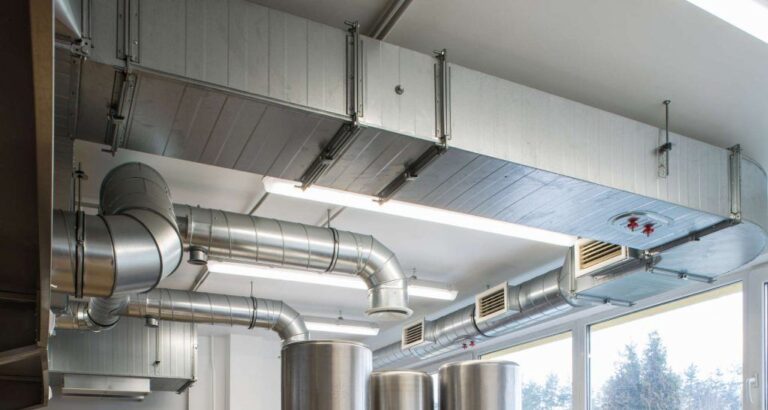

High pressure ductwork moves conditioned air through smaller-diameter tubing at higher velocity than a standard duct system. Instead of the wide sheet-metal trunks and branch runs you find in most homes, this design pushes air through flexible two-inch supply lines that fit inside existing walls, ceilings, and tight framing cavities. For older St. Clair Shores homes with plaster walls, decorative moldings, and no room for bulky duct chases, this approach makes central heating and cooling possible without tearing the house apart.
At Apollo Heating & Cooling, we install, service, and repair high pressure ductwork throughout St. Clair Shores and the surrounding areas. Locally owned and operated since 1981, we have watched this technology grow from a niche solution into a practical answer for homeowners who want modern comfort in a home that was never built for it.
What Makes High Pressure Ductwork Different
Traditional forced-air systems rely on low static pressure and large ducts to move a big volume of air slowly. High pressure ductwork, sometimes called high-velocity or small-duct high-velocity (SDHV), does the opposite. A compact air handler generates higher static pressure, and small insulated tubing carries the air quickly to each room. The air enters through small round or slotted outlets, often no wider than a coffee cup.
This high velocity creates a mixing effect called aspiration. As the fast-moving air leaves the outlet, it pulls the surrounding room air into motion. The result is even temperatures from floor to ceiling and fewer of the drafty cold spots and warm pockets that plague conventional systems. Many homeowners notice the difference right away, especially in rooms with high ceilings or large windows.
Because the tubing is small and flexible, we can route it through joist bays, behind knee walls, above dropped ceilings, and through closets. That flexibility is the main reason high pressure ductwork has become so popular in historic and architecturally detailed properties where preserving the original look matters.
Why St. Clair Shores Homeowners Choose This System
St. Clair Shores has a rich mix of housing, from mid-century bungalows to lakeside homes and older brick colonials. Many of these houses were built with radiators, boilers, or window units and never had the space for full-size ductwork. When owners want to add central air conditioning or replace an aging system, tearing out walls to fit large ducts is expensive and disruptive.
High pressure ductwork solves that problem. The small tubing fits where standard ducts cannot go, which means we can keep plaster ceilings, crown molding, and hardwood trim intact. For homeowners who have invested in restoring an older property, that preservation is worth a great deal.
There are practical comfort benefits too. Consider a few of the reasons owners come to us for this system:
- Space savings: the compact air handler and tubing free up basement, attic, and closet room that a conventional system would consume.
- Better humidity control: high-velocity systems remove more moisture from the air during Michigan summers, which makes rooms feel cooler at higher thermostat settings.
- Quiet operation: the small outlets and insulated tubing keep noise low, and the air handler is often placed away from living spaces.
Our goal at Apollo Heating & Cooling is 100% customer satisfaction, and we find that matching the right system to the right home is the first step toward earning it.
Our Installation Process
Installing high pressure ductwork is precise work. The small tubing and high static pressure leave little room for error, so we follow a careful sequence on every project. We begin with a full evaluation of your home. This includes a room-by-room load calculation that accounts for square footage, ceiling height, window area, insulation, and orientation. The load calculation tells us exactly how much heating and cooling capacity each space needs, so we can size the air handler and plan the tubing runs correctly.
Next we map the routing. Because the tubing is flexible, we look for the least invasive path through existing cavities. In many homes we can feed the lines through closets, chases, and joist bays with only small access openings that we patch and finish afterward. We plan outlet placement to distribute air evenly, usually near the ceiling or high on the wall where the aspiration effect works best.
The installation itself involves several key steps:
- Set the air handler: we position the compact unit and connect it to the outdoor condenser or heat source.
- Run the supply tubing: we route the insulated flexible lines to each planned outlet location, sealing every connection.
- Install the plenum and outlets: the main plenum feeds the tubing, and we fit the small outlets flush with the finished surface.
- Test and balance: we measure airflow at each outlet, check static pressure, and adjust the system so every room gets the correct volume of air.
We treat balancing as a critical final stage. A high pressure system that is not balanced can be loud or uneven, so we verify performance before we consider the job complete. This one-on-one attention is part of how we work on every job, no matter the size.
Maintenance and Repair Considerations
High pressure ductwork is durable, but like any HVAC system it needs regular care to perform its best. The high static pressure design means small problems can affect the whole system, so routine attention pays off. We recommend annual service that includes filter changes, coil cleaning, blower inspection, and a static pressure check.
Filters matter more in these systems than in standard ones. Because the air moves fast and the tubing is narrow, a clogged filter forces the air handler to work harder and can reduce airflow to the outlets farthest from the plenum. We show every customer where their filter is located and how often to change it based on their home and habits.
When something does go wrong, common issues we diagnose and repair include reduced airflow from a specific outlet, whistling noises at the outlets, higher-than-expected humidity, and short cycling. Many of these trace back to a leak in the tubing, a failing blower motor, or an outlet that has come loose. Because we install these systems, we understand how they behave and can find the fault quickly rather than guessing.
Serving St. Clair Shores and Beyond
Apollo Heating & Cooling is dedicated to serving St. Clair Shores and the surrounding areas, including Saint Clair Shores, Roseville, Warren, Eastpointe, Harper Woods, Center Line, Hamtramck, and Mount Clemens, MI. Whether you own a historic home that needs central air without demolition, a newer property where space is tight, or a building where you simply want quieter and more even comfort, high pressure ductwork may be the right fit.
Our team handles the full scope of the work: heating service, AC repair, furnace repair, and complete HVAC service. When you call us about high pressure ductwork, we take the time to understand your home and your goals before we recommend anything. We would rather explain your options clearly than push a system that does not suit your needs.
We have built our reputation in this community one job at a time since 1981. That local, hands-on approach shapes everything we do, from the first evaluation to the final balancing check. If you are considering high pressure ductwork for your St. Clair Shores home, reach out to Apollo Heating & Cooling and let us walk you through what the system can do for your comfort, your energy use, and the character of your home.